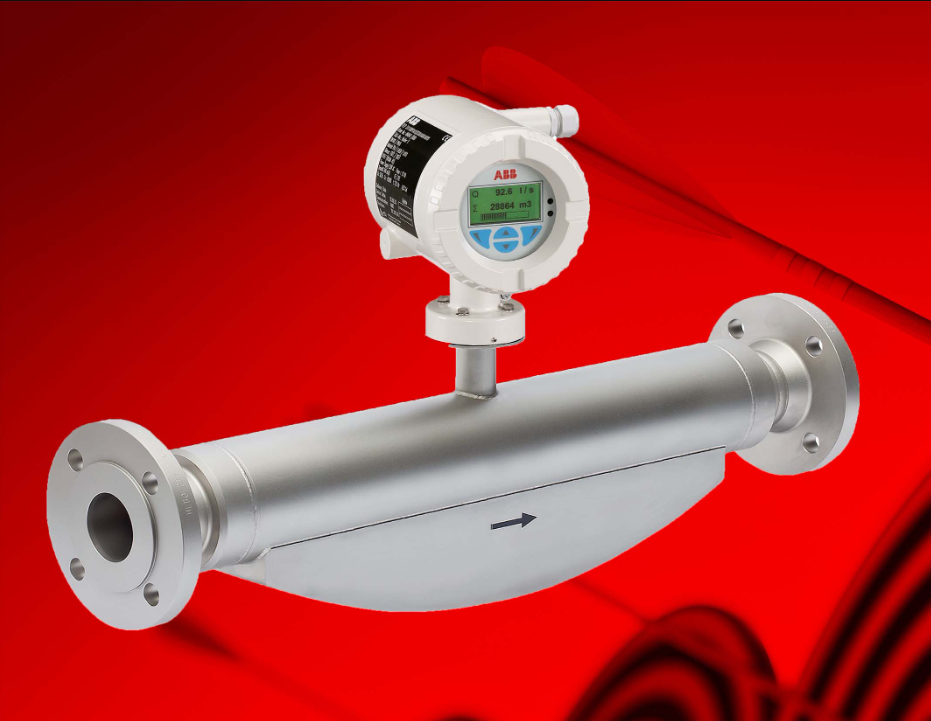
Discussion on the Bubble Problem of Mass Flow Meter
Mass flow meters, with their high accuracy and ability to directly measure mass flow, have long been the preferred choice of many engineers. However, a question that has long plagued field technicians is whether they can function properly when bubbles are present in the measured liquid. Today, we will delve into this seemingly simple yet profoundly impactful technical topic.
1. Bubble Intrusion: Where Do They Come From?
Ideally, liquids should be pure and continuous, but in reality, bubbles are ubiquitous. They can arise from:
Insufficient pump suction pressure, causing liquid vaporization;
Improper piping design, resulting in air pockets or vortices;
Dissolved gases in the liquid, which are released when pressure changes or temperature rises;
Air introduced during the addition process, such as mixing or filling.
Once these “uninvited guests” enter the measuring pipe, they can interfere with flow measurement.
2. The Working Principle of a Mass Flowmeter: A Rigid Vibrating “Balance”
Mass flowmeters (especially Coriolis mass flowmeters) operate based on the Coriolis effect. This principle excites a measuring tube to vibrate at its natural frequency. As fluid flows through the vibrating tube, the Coriolis force causes a tiny phase difference in the tube, which is proportional to the mass flow rate.
Simply put, it acts like a precise “dynamic balance,” “weighing” the mass flowing through by detecting changes in vibration.
3. The Destructive Power of Bubbles: From Minor Perturbations to Loss of Control
When bubbles are mixed into a liquid, problems arise. The presence of bubbles alters the physical properties of the fluid, in turn affecting the vibration behavior of the measuring tube:
Density Change: The density of bubbles is much lower than that of the liquid, causing the average density of the mixed fluid to decrease. The mass flowmeter typically outputs a density value simultaneously, resulting in an abnormally low density reading, which is itself a warning sign.
Phase Difference Distortion: Uneven distribution of bubbles in the vibrating tube can cause instability in the vibration mode, resulting in fluctuations or distortion in the phase difference signal, thus affecting the accuracy of mass flow calculations.
Complexity of Two-Phase Flow: Gas-liquid two-phase flow has complex flow patterns (such as bubbly flow, slug flow, and annular flow). Different patterns have different effects on the vibrating tube, making it difficult to establish a unified compensation model.
False Positive or Negative Detection of Empty or Full Pipe: Large numbers of bubbles may cause the sensor to misidentify the pipe as empty, triggering an alarm or halting measurement.
4. Real-World Compromises and Responses
Does this mean that mass flow meters are completely unsuitable for gas-containing liquids? The answer is not absolute.
Low Gas Void (<1%): When the bubble content is low and evenly distributed, some high-end mass flow meters have a certain degree of fault tolerance and may still provide relatively reliable measurements, but accuracy will be reduced.
Specialized Models and Algorithms: Some manufacturers have launched models optimized for wet gas or two-phase flow. By improving sensor design and introducing complex signal processing algorithms, they attempt to mitigate the effects of bubbles to a certain extent.
Process Optimization: The most fundamental solution is to reduce bubble generation at the source. This can include installing an air eliminator before the flowmeter, ensuring the pump has sufficient net positive suction head (NPSH), and optimizing pipe slopes to facilitate degassing.
5. Alternative Solutions: When Mass Flow Meters Fail
If the bubble problem is unavoidable, other flowmeter types may be worth considering:
Electromagnetic flowmeters: Ineffective for non-conductive liquids, but relatively insensitive to conductive liquids containing gas;
Ultrasonic flowmeters: Some models are sensitive to bubbles, but Doppler flowmeters can be used to measure fluids containing solids or bubbles;
Turbine flowmeters: Simple in structure, but bubbles may affect impeller rotation, and wear issues need to be considered.
6. Conclusion: Approach with Reason and Select Scientifically
Mass flowmeters generally cannot guarantee proper operation or high-precision measurement in liquids containing bubbles. Bubbles can significantly interfere with the core measurement mechanism, leading to reading deviations or even failure. While technology is advancing, there is currently no perfect “immunity” solution.
Therefore, when selecting a flowmeter, it’s crucial to assess the gas content of the liquid on-site. If persistent or significant bubbles are present, prioritize process improvements or selecting more appropriate measurement technologies. Never blindly rely on the “high precision” of mass flowmeters while ignoring the complexities of actual operating conditions.
After all, even the most sophisticated instruments can only truly realize their value in the right environment.